The Unseen Network Demands of Simultaneous Premier League Broadcasts Across Mobile and Smart TV Setups for Fixtures Including Newcastle vs Crystal Palace and Liverpool vs Leicester City
Written by Paul Sullivan · Aug 24, 2026
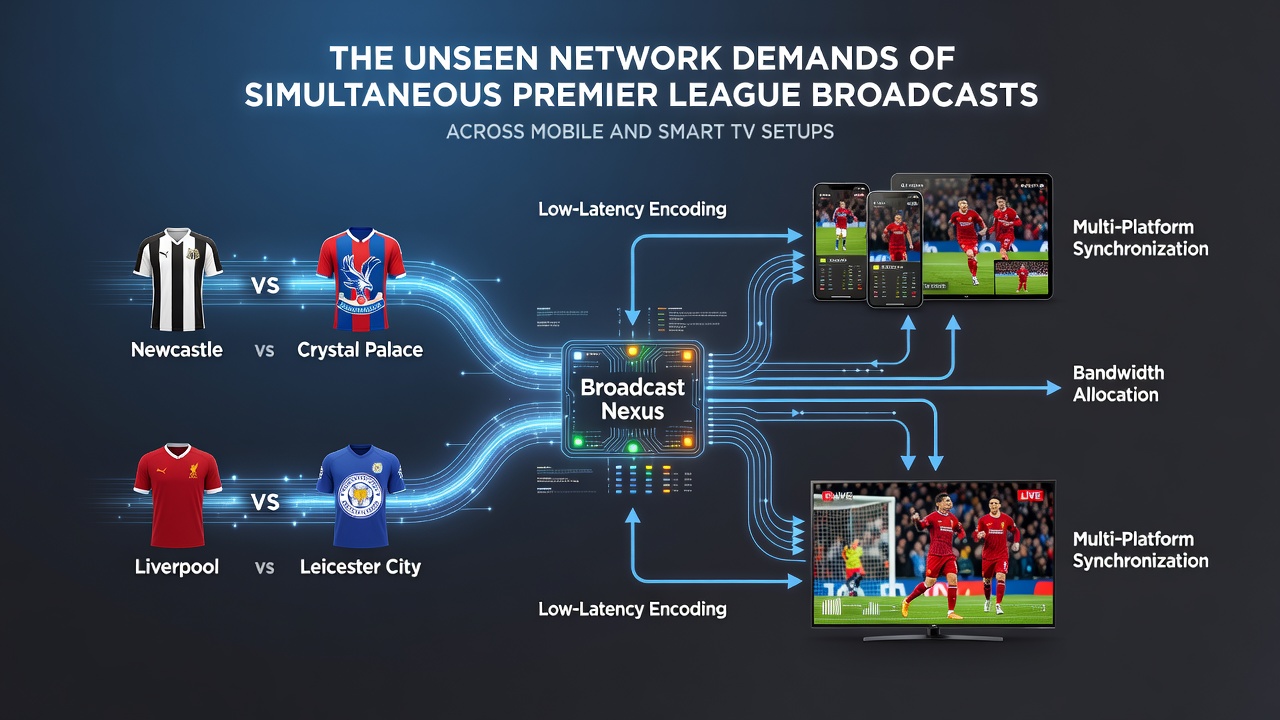
The Unseen Network Demands of Simultaneous Premier League Broadcasts Across Mobile and Smart TV Setups for Fixtures Including Newcastle vs Crystal Palace and Liverpool vs Leicester City
Premier League fixtures such as Newcastle vs Crystal Palace and Liverpool vs Leicester City often draw viewers who stream matches simultaneously across mobile phones and smart TVs, and this pattern creates distinct network requirements that broadcasters and service providers must manage. In August 2026 the new season begins with schedules that place multiple games in overlapping time slots, which means households and mobile networks handle concurrent streams at varying resolutions and bitrates. Data from industry reports shows that 4K broadcasts on smart TVs typically consume 25 megabits per second while HD streams on mobile devices use between 5 and 8 megabits per second, yet when both run at once the combined load climbs quickly and tests the capacity of home routers along with cellular towers.
Bandwidth Allocation for Multiple Device Types
Smart TV setups connected to fiber or cable broadband receive higher resolution feeds because the connection remains stable for longer periods, whereas mobile users encounter variable signal strength that forces adaptive bitrate adjustments. Researchers at academic institutions have measured peak usage during evening windows when two Premier League matches air together, and figures reveal that a single household streaming one 4K match alongside an HD mobile feed generates sustained traffic of 30 to 35 megabits per second with occasional spikes during replays and goal celebrations. Service providers therefore allocate dynamic quality tiers so that the TV maintains 4K while the phone drops to 720p if congestion appears, and this balancing act prevents complete dropouts across both devices.
Infrastructure Challenges During Overlapping Fixtures
Content delivery networks route streams through edge servers positioned near population centers, yet simultaneous broadcasts of Newcastle vs Crystal Palace and Liverpool vs Leicester City place extra pressure on those nodes because thousands of viewers request data at identical moments. According to measurements compiled by regulatory bodies such as the Federal Communications Commission, urban areas with dense 5G coverage still experience localized slowdowns when mobile and fixed-line traffic converge on the same backhaul links. Engineers monitor these patterns through real-time analytics dashboards that flag when buffer rates exceed normal thresholds, and they respond by rerouting traffic or temporarily throttling non-priority streams until demand subsides.
Mobile Network Capacity and Smart TV Integration
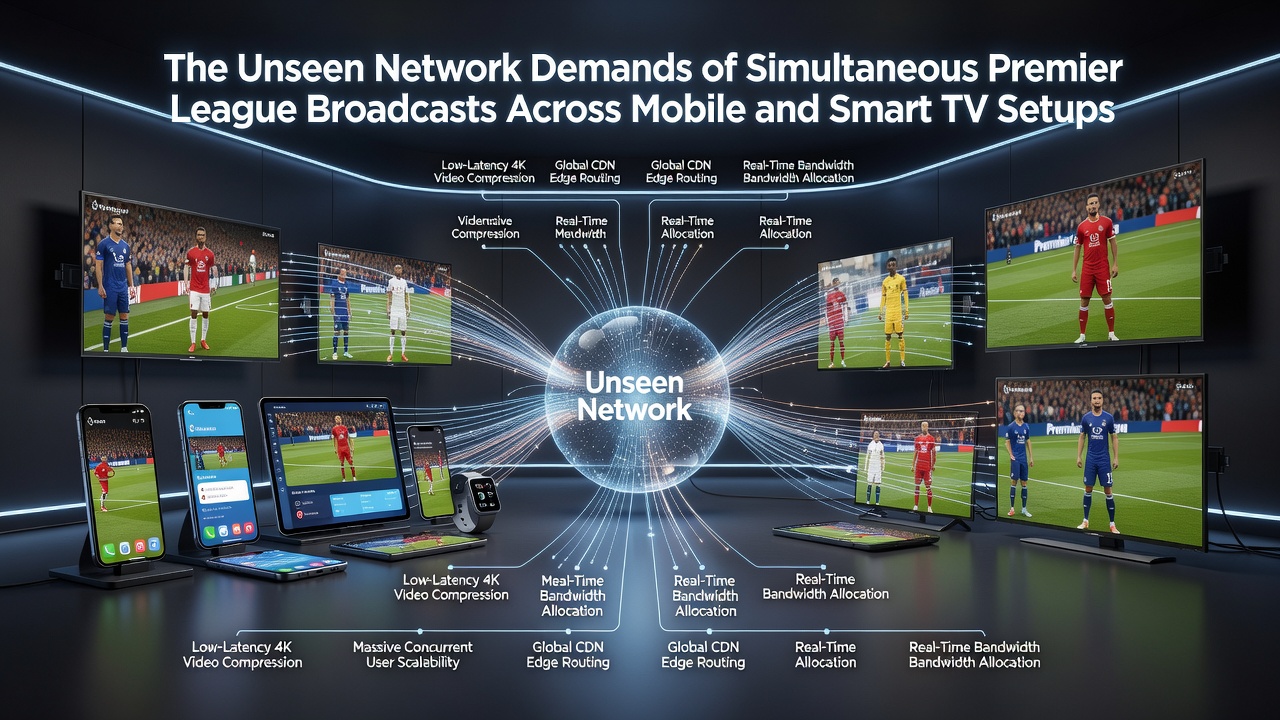
Mobile operators deploy small cells and carrier aggregation techniques to handle the surge, while smart TV applications rely on Wi-Fi 6 routers that manage multiple simultaneous connections without packet loss. Observers note that viewers in August 2026 will see improved performance compared with earlier seasons because infrastructure upgrades completed in prior years now support higher aggregate throughput, although rural regions continue to face limitations when both a television and a phone attempt high-definition playback. Studies conducted by research groups indicate that latency remains under 200 milliseconds on optimized 5G connections during live events, which keeps commentary and visuals synchronized across device types even when two matches occupy the schedule.
Quality Adaptation and Viewer Experience
Adaptive streaming protocols evaluate available bandwidth every few seconds and switch resolutions automatically, which allows one viewer to watch Newcastle vs Crystal Palace in 4K on the living room television while another follows Liverpool vs Leicester City on a phone with reduced quality during travel. Data collected by industry organizations shows that this automatic adjustment prevents most interruptions, yet it also means mobile users sometimes receive lower frame rates when signal conditions fluctuate. Providers publish recommended minimum speeds for each resolution tier so consumers can verify their connections meet requirements before match day arrives.
Future Scaling Considerations
Network planners already model scenarios that include 8K trials alongside existing 4K and HD offerings, and these projections suggest that simultaneous multi-match viewing will require additional spectrum allocation and denser small-cell deployment by 2027. Figures released through government agencies in various regions confirm that average household broadband speeds have risen steadily, yet the gap between peak demand during Premier League windows and baseline usage continues to widen. Technicians therefore test failover mechanisms that shift traffic between fiber, cable, and 5G links to maintain service continuity for every active stream.
Conclusion
The technical demands created by simultaneous Premier League broadcasts across mobile and smart TV devices center on bandwidth management, adaptive protocols, and infrastructure resilience rather than any single element. As the 2026 season unfolds with fixtures such as Newcastle vs Crystal Palace and Liverpool vs Leicester City, the systems already in place demonstrate how coordinated adjustments keep multiple streams operational. Continued monitoring and incremental upgrades ensure that data flows remain stable even when viewer numbers peak across different device categories and network types.