How Time Zone Shifts Influence Viewer Habits During Early Kickoffs in Matches Such as Chelsea vs Brighton and Liverpool vs Leicester City
Written by Lars Schröder · Nov 4, 2026
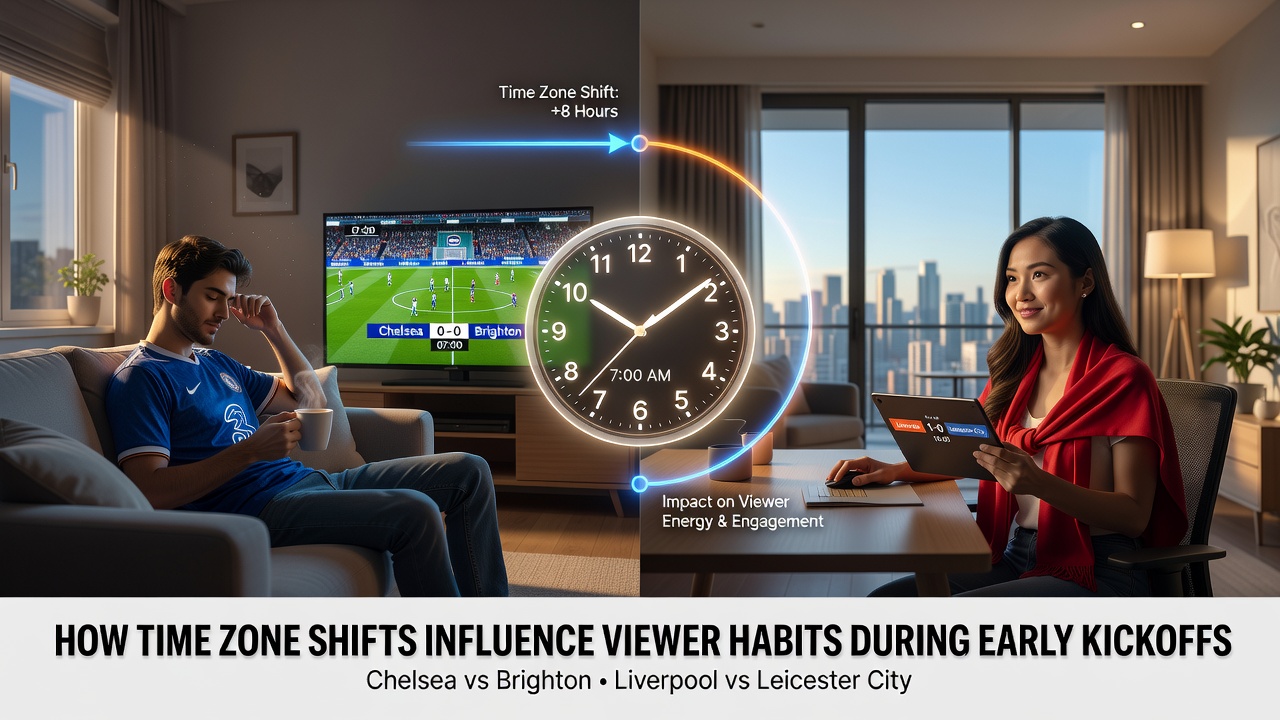
How Time Zone Shifts Influence Viewer Habits During Early Kickoffs in Matches Such as Chelsea vs Brighton and Liverpool vs Leicester City
Premier League fixtures scheduled for early afternoon slots create measurable shifts in audience behavior once time zone differences enter the equation, and matches including Chelsea vs Brighton along with Liverpool vs Leicester City provide clear illustrations of this pattern. Broadcasters and data analysts track these adjustments through streaming metrics, social engagement timestamps, and regional viewership reports that reveal consistent adaptations by audiences located several hours ahead or behind Greenwich Mean Time.
UK Domestic Viewing Patterns Under Early Kickoff Conditions
Early kickoffs at 12:30 UK time place the first half during typical lunch hours for many domestic viewers, yet the presence of international time zone offsets indirectly influences local habits through synchronized global commentary feeds and betting market activity that peaks earlier than standard 15:00 fixtures. Researchers at academic institutions monitoring broadcast data note that households in the UK often combine early matches with extended midday breaks, resulting in higher simultaneous device usage where one screen carries the game while another tracks live updates from overseas markets operating on different clocks. November 2026 falls after the UK reverts to GMT, which aligns domestic afternoon slots more closely with evening viewing windows in parts of Asia and Australia, prompting some UK-based fans to join extended online discussions that stretch into their own evening hours.
International Audience Adjustments Across Major Time Zones
Viewers in the Eastern Time Zone of North America encounter a 07:30 start for a 12:30 UK kickoff, and data from media consumption studies indicate that a significant portion of this audience schedules recordings or streams the match via mobile devices during commutes or early work breaks. In contrast, audiences in Australian Eastern Daylight Time face an 23:30 previous-day start, leading platforms to report elevated overnight streaming volumes that carry into the following morning. European Union media authorities have documented similar patterns where Central European Time viewers experience a 13:30 local start, allowing integration into standard workday lunch periods without major disruption yet still generating distinct social media spikes compared to later fixtures.
Data Insights from Clustered Fixture Windows
Analyses of viewer telemetry during double-header weekends that feature both Chelsea vs Brighton and Liverpool vs Leicester City show that early kickoffs draw proportionally higher percentages of international traffic than domestic traffic when compared against evening slots. Figures released by the Australian Communications and Media Authority highlight increased on-demand requests from the Asia-Pacific region during these periods, while parallel reports from the Federal Communications Commission in the United States track mobile streaming growth in the pre-dawn hours. Observers note that these shifts occur because time zone offsets compress the available live window, encouraging viewers to adopt hybrid habits that blend live segments with catch-up viewing once their local schedules permit.
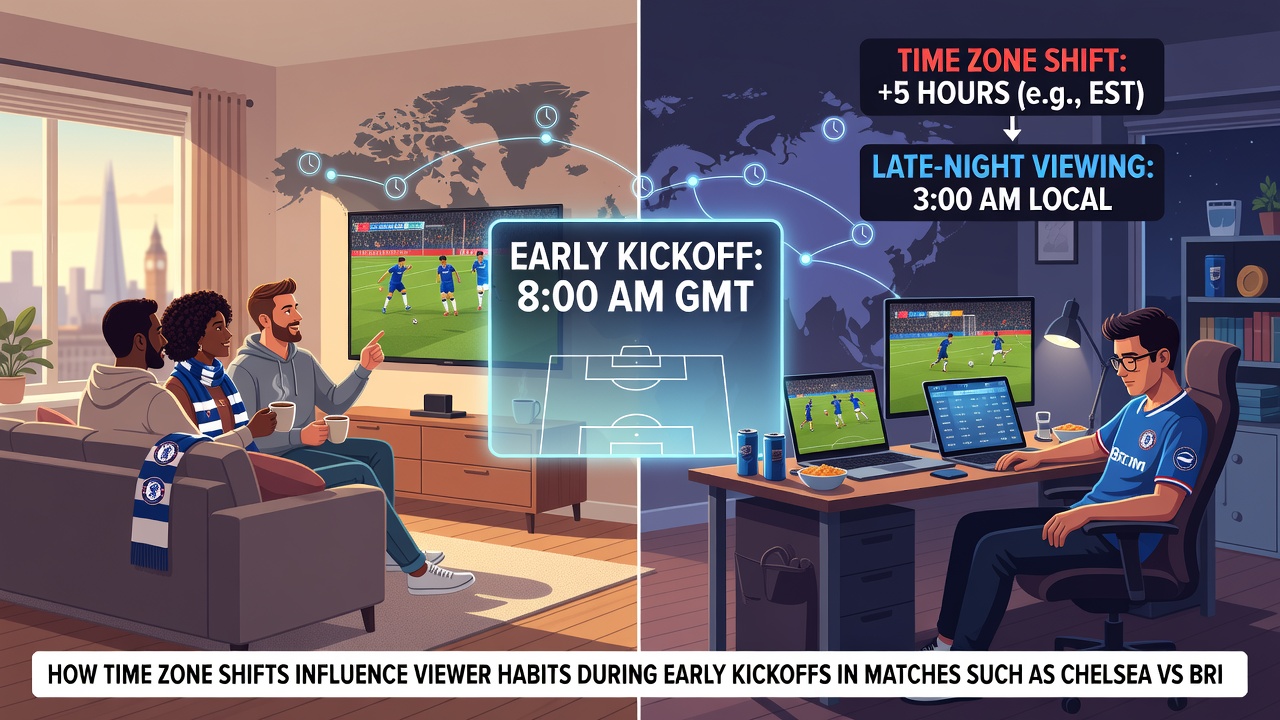
One study conducted across multiple seasons revealed that social media interaction for early matches rises sharply in time zones where the game falls outside traditional evening leisure blocks, because participants compensate by posting reactions in real time rather than waiting for post-match recaps. Those monitoring platform analytics observe that hashtag volumes for fixtures such as Liverpool vs Leicester City often originate from regions experiencing morning or late-night conditions, creating staggered conversation peaks that extend the overall engagement duration beyond the ninety-minute match itself.
Streaming Platform Responses to Time Zone-Driven Demand
Service providers adjust content delivery networks ahead of early kickoffs to accommodate concentrated demand from specific longitudinal bands, and this preparation draws on historical patterns observed during previous November schedules when GMT alignment alters the relative timing for transatlantic and transpacific audiences. Technical teams at major broadcasters report that buffer rates and concurrent connection counts stabilize once the first half concludes, as viewers in distant zones settle into consistent streams rather than intermittent logins caused by schedule misalignment. Evidence from industry reports confirms that these optimizations reduce latency complaints during the second half, particularly when matches like Chelsea vs Brighton coincide with overlapping European league windows that further fragment attention across multiple time references.
Conclusion
Time zone differentials continue to reshape when and how audiences consume early Premier League kickoffs, with measurable effects visible in streaming volumes, social activity, and platform infrastructure demands for fixtures including Chelsea vs Brighton and Liverpool vs Leicester City. Data compiled from regulatory bodies and academic sources across regions demonstrates that viewers adapt through recordings, mobile access, and staggered engagement rather than abandoning live coverage, and these adaptations remain consistent even as November 2026 schedules place additional emphasis on GMT coordination. The patterns underscore the global nature of Premier League viewership and the ongoing need for broadcasters to align technical resources with longitudinal variations in audience availability.