Coordinating Real-Time Video Distribution for Multiple Premier League Venues on a Single Afternoon
Written by Devon Hartmann · Sep 9, 2026
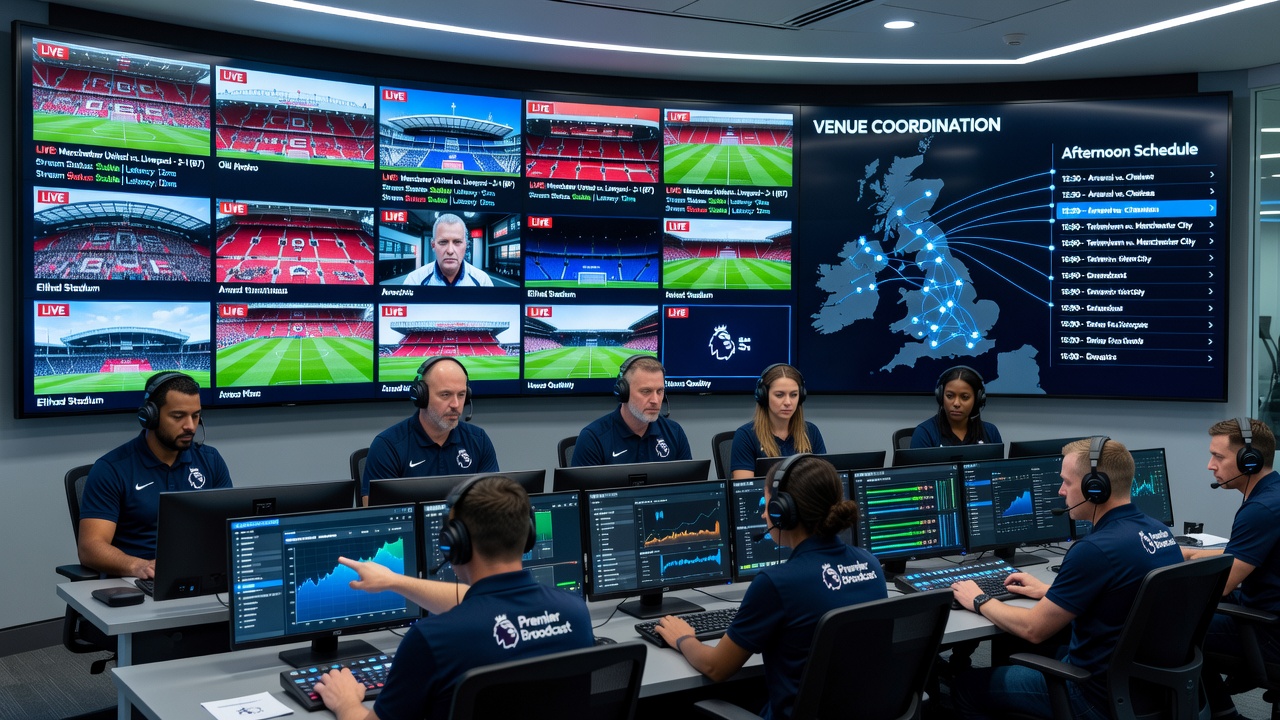
Coordinating Real-Time Video Distribution for Multiple Premier League Venues on a Single Afternoon
Coordinating real-time video distribution for several Premier League venues on one afternoon demands tight integration of satellite uplinks, fiber optic backbones, and content delivery networks that push live footage to millions of viewers simultaneously. Broadcasters must synchronize feeds from grounds that may sit hundreds of miles apart while maintaining frame-accurate timing and broadcast standards set by regulators. Data from Ofcom shows that peak afternoon windows often carry three or more concurrent matches, each requiring separate encoding paths and redundant transmission routes to avoid outages.
Infrastructure Components at Each Venue
Stadium control rooms house camera arrays that feed into production trucks equipped with encoders capable of handling 4K and HDR signals. These trucks connect to dedicated fiber lines provided by network operators, yet many crews also maintain satellite dishes as backup when terrestrial circuits face congestion. Engineers monitor latency budgets that stay under 200 milliseconds end-to-end, a threshold that keeps commentary and graphics aligned across platforms. Research from the European Broadcasting Union highlights how venue-specific audio mixing further complicates the workflow because crowd noise and pitch-side microphones must blend without introducing echo or delay.
Synchronization Across Multiple Sites
When matches kick off within minutes of each other, timing servers at a central master control facility lock every venue's timecode to a single reference clock. This process prevents picture drift that would otherwise appear when viewers switch between streams or watch picture-in-picture presentations. Observers note that even a 50-millisecond offset can trigger complaints from rights holders who expect lip-sync accuracy on every device. And because different venues use varying camera counts, the central facility must normalize frame rates and color spaces before aggregation into unified playout systems.
Network Capacity and Redundancy Planning
Peak bandwidth requirements for a triple-header afternoon can exceed 40 Gbps at the primary distribution hub. Operators therefore provision diverse paths that include both national fiber rings and international peering points so that a single cable cut does not interrupt service. Figures from the Australian Communications and Media Authority reveal similar capacity planning occurs in other major sports markets, underscoring that Premier League schedules represent one of the densest live video events worldwide. Redundant encoders sit in geographically separate locations, ready to assume control within seconds if primary units detect packet loss or hardware faults.
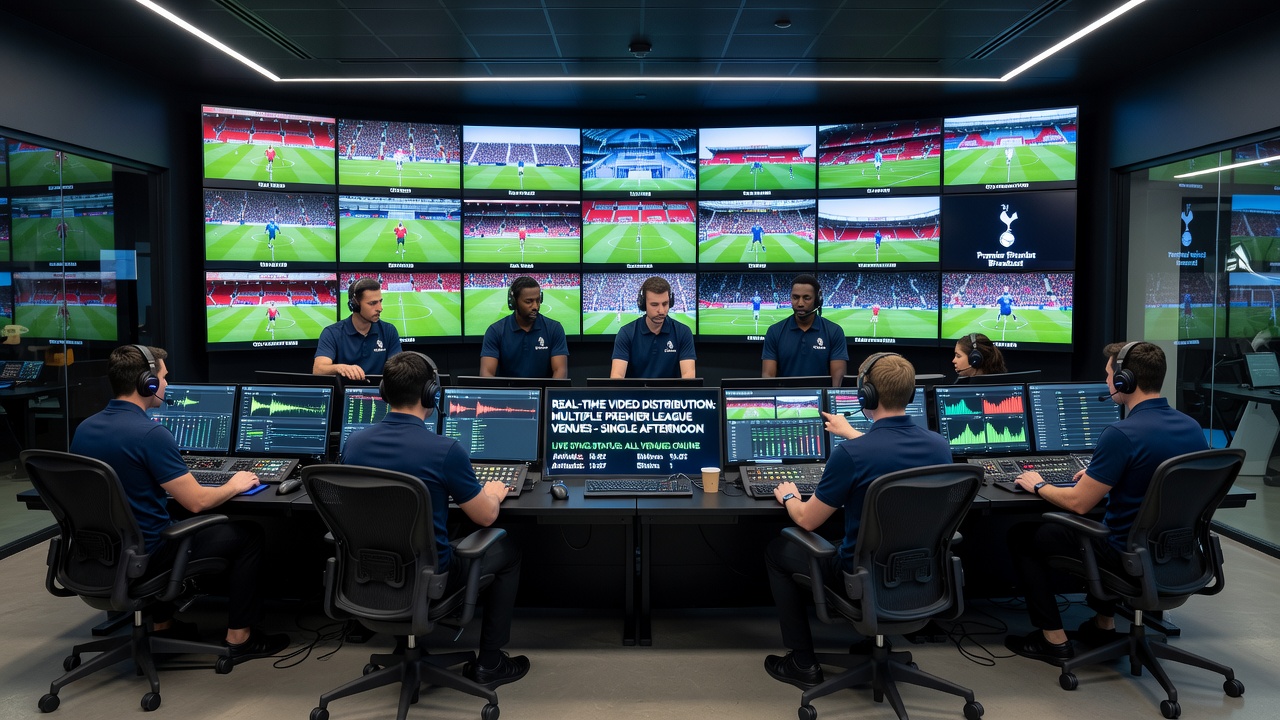
Challenges During Packed September Windows
September 2026 is projected to feature multiple midweek and weekend clusters that place four or more top-flight fixtures on the same afternoon. Such density forces schedulers to stagger start times by at least 15 minutes, giving encoding farms time to ramp up resources without exceeding allocated satellite transponder capacity. Engineers also coordinate with mobile network providers because viewer migration to smartphones spikes during these windows, requiring dynamic bitrate adjustment to prevent buffering. Those who have studied similar events report that weather events at one venue, such as heavy rain affecting satellite dishes, can trigger automatic failover to fiber paths that were already carrying other matches.
Regulatory and Standards Compliance
Compliance teams verify that all distributed signals meet accessibility requirements, including closed captions and audio description tracks that must travel alongside the main video. Government agencies in multiple jurisdictions require logging of every stream for at least 90 days, creating additional storage and retrieval demands on the distribution architecture. What's interesting is that these logs also help identify subtle quality issues that surface only when feeds from several venues are compared side by side.
Conclusion
Successful coordination of real-time video distribution for multiple Premier League venues rests on layered redundancies, precise timing protocols, and continuous monitoring that adapts to changing network conditions throughout the afternoon. As fixture lists grow denser in seasons such as 2026, the systems developed today will determine whether viewers experience uninterrupted coverage across every platform they choose.